
Putting together the nursery can be one of the most exciting parts of preparing for your little one’s arrival.
Unfortunately, marketing teams are often more invested in selling a “look” or a “vibe” for a nursery than they are in the safety of the nursery.
Consequently, Pinterest and Instagram are full of nurseries that look cute but pose many sleeping hazards for newborns, babies, and toddlers.
As you setup the nursery, keep the following safety basics in mind:
-
A Safe Infant Crib
-
The ABC’s of Safe Infant Sleep
-
No Smoking, Drinking, or Drug Use
-
Cover Exposed Cords
-
Dress Baby Appropriately
#1 A Safe Infant Crib
I don’t know if this will dash your dreams or come as a relief, but all you need for the crib is the:
-
Crib
-
Crib mattress
-
Mattress protector
-
Mattress sheet
That’s it!

Safety Risks to Avoid:
-
Mobiles (save those for above the changing table)
-
Blankets
-
Bumpers
-
Canopies
-
Pillows
-
Stuffed animals
-
Or anything else you’re considering putting in the crib
If you lookup nurseries on Pinterest, almost every picture has at least one or more safety risk pictured. The nursery may look adorable at first glance, but once you look at it again through the lens of safe sleep, you recognize the number of suffocation and choking hazards present.
Does your empty crib look plain and boring in comparison? Great, that’s just what we want!
All the cute additions shown in marketing images pose immense safety risks to newborns and infants. Baby only needs a firm, flat, and empty sleeping surface.
>> If your little one is struggling to sleep in their crib, I can assure you that it is NOT because they think their crib isn’t cozy enough. <<
-
For newborns, checkout this article for helping them prepare for sleep.
Can I use a pack n’ play or bassinet?
As long as you’ve verified the product’s safety and know its age and/or weight and height limit for the occupant, these can be great options for parents who want to room share or are tight on space.
A pack n’ play is also a great option if your baby’s limbs are getting caught in the crib slats and disturbing their sleep.
When can I add in a lovey or stuffed animal?
The AAP recommends waiting until your little one is 12 months old before adding in any loveys or stuffed animals.
#2 The ABC’s of Safe Infant Sleep
Always place baby to sleep Alone on their Back in their Crib.

Two of the riskiest locations for a baby to sleep is their parent’s bed and on the couch. Bedsharing (sometimes referred to as co-sleeping) and sleeping on the couch is not recommended for a variety of safety reasons.
But room sharing is encouraged! Especially during the baby’s first 3-6 months. In fact the AAP suggests room sharing for the first 6-12 months.
-
There are bedside bassinets available for parents who want their baby right next to them, without compromising baby’s safety.

Why isn’t bedsharing recommended?
Some of the main reasons bedsharing is not recommended is because:
-
Bedsharing increases the risk of SIDS.
-
Bedframes and adult mattresses are not tested for infant safety.
-
Pillows, sheets, and bedding pose a significant suffocation and injury risk to infants and toddlers.
-
The adults who are sleeping in the bed also pose a safety risk to the infant or toddler.
NOTE: I do not support bedsharing/co-sleeping in any of my sleep plans. It’s too risky of a sleeping environment.
#3 No Smoking, Drinking, or Drug Use
Any adult who will be around the baby (particularly when room sharing) should not engage in any smoking, drinking, or drug use. These behaviors increase the risk of SIDS in addition to being generally unsafe for the baby.
#4 Cover Exposed Cords

As best as possible, keep any electronics with cords a few feet away from the crib. Though, depending on the size of your room, that might not be an option.
Either way, remember to cover any exposed cords.
Your newborn cannot roll, crawl, or grasp the cords. But your infant or young toddler will be able to, sooner than you expect!
#5 Dress Baby Appropriately
Cold babies cry. Hot babies die.
It’s an intense saying but now you won’t forget! It’s better to err on the side of dressing your baby too cold than too hot.
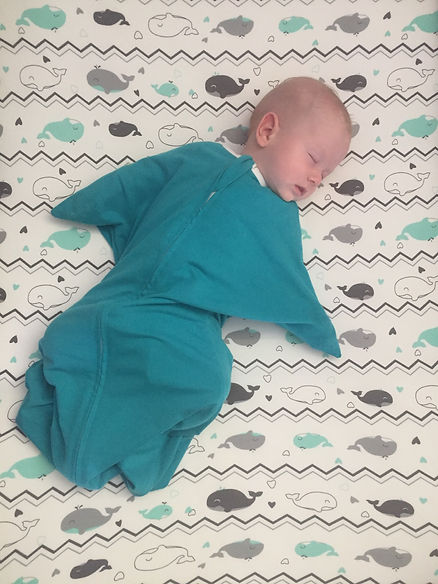
Babies overheat easily. Parents often assume their newborn or infant is cold. The bigger risk is over-dressing your little one.
When dressing your little one for sleep, keep in mind that they’ll have their onesie or pajamas + a swaddle or sleep sack. Don’t get carried away with adding in extra layers.
And again, never add in any loose bedding/blankets!!
Additionally, avoid:
-
Headbands
-
Hats
-
Pacifier clips
-
Or anything else that could shift during sleep and cover your little one’s mouth or nose
But our house is unusually cold. How can I ensure my baby isn’t cold?
I can relate! We rented out a basement apartment when our oldest two daughters were little. During the winter, it got so cold in the nursery! Colder than any other room in the house.
To safely offset the cold, we:
-
Added insulation to her window.
-
Purchased sleep sacks with a higher TOG.
-
Used fleece pajamas.
-
Used pajamas or onesies with hand coverings.
-
On the coldest of nights, we added a onesie underneath her pajamas.
But we never covered her head, never used blankets, and never left a space heater on while she slept.
NOTE: I am a certified sleep consultant; I am not certified in baby-proofing. The list I have provided above is by no means exhaustive. But it highlights some of the most common high-risk errors that can impact your little one’s safety while sleeping.
Megan Snow is the founder of Sweely Asleep. You can follow her on Instagram.